Igor Solonkovich - How to Become a Computer Support Specialist
Computer support specialists are charged with troubleshooting and resolving a variety of computer and software issues. They may work at a call center, or like Igor Solonkovich, a Tier 3 Support Specialist in New Jersey, provide technical support in the IT department of an organization. There are a number of different industries that a computer support specialist may work in, including telecommunications, finance, educational, and the IT field. Many computer support specialists are required to work irregular hours due to the unpredictability of computer systems.

Most of the computer support specialist jobs will require you to have some form of formal education. Many employers require potential employees to hold a non-graduate degree like an Associate’s or Bachelor’s Degree. Focusing on information technology, computer science or desktop support can help you to better qualify for a computer support position within a company. These types of programs will teach you the skills that are needed to provide technical support to clients and customers. While obtaining your degree, you can expect to take courses in computer hardware, software, operating systems, networks, and diagnostics.
After you complete your degree, you will need to gain some work experience in the field. Many computer specialists must first start off in lower-level positions like call center or helpdesk support. To help bypass this, you may want to try and complete an internship during your course of education. Once you find a position as a computer support specialist, you will need to continue your education by becoming certified in different operating systems. Igor Solonkovich has continued learning by earning several Microsoft certifications throughout his 15-year career. Earning different certifications and gaining work experience can lead you to a position with high pay and more responsibility.
Igor Solonkovich - A Beginner’s Guide to Ping Pong
On a whim, you bought a ping pong table, even though you have never played a single game. You’ve started to play on a regular basis with your friends and family, but you want to improve your game and play in local tournaments like Igor Solonkovich, an IT professional from New Jersey. Beginning ping pong players tend to develop bad habits and often times fall back to the same shots or strokes. While it takes time to become good at the game, there are some things you can do to improve your game now.

The first way to improve your game is to hold the paddle correctly. Holding the paddle correctly will give you the flexibility to cover a variety of shots that you will need to take your game to the next level. Once you have mastered how to hold the paddle correctly, you have to then work on your timing. Being able to hit the ball with the right stroke at the right time will vastly improve your game. Don’t get too stressed when working on this aspect of the game as it takes time to master great shots.
When working on your timing, you also need to learn how to control the ping pong ball. This means learning to hit the ball hard enough to make it to the other side of the table, but not hitting it too hard. This may take some time to master. Finally, if you really want to improve your game, find a mentor, like Igor Solonkovich. Join a club where you can meet other players who are better than you and let them help you improve. In no time, you will be able to see yourself grow as a player.
Igor Solonkovich - Becoming an IT Superstar
Like Igor Solonkovich, you are an expert IT professional. You’ve spent long years building your skill level and experience. You know what you’re doing but can’t seem to build your reputation outside of your company. If you are struggling to make a name for yourself as an expert in the industry, here are several things you can do to build your reputation as an IT Superstar.
When it comes to building your reputation you have to understand that you can’t do it all. The best way to shine in the industry is to specialize in one area. If you try to be a jack of all trades, you won’t be able to become an expert at anything, stifling your ability to stand out from the crowd. Once you decide which area you want to specialize in, you have to gain experience in that particular field of IT. You can gain the experience a number of ways including through the corporate environment, running your own IT related business, consulting, or a number of other ways.

As you begin building your reputation as an IT Superstar, you want to start small and obtain your goal in increments. Find a way to become well known and respected through web forums or within a local IT user group. Use this time to hone your skills and earn a reputation in these areas. This will eventually lead you to be recognized on a broader plane. Another great way to get your name out there as an expert is to contribute to IT webzines. You can leverage the reputation you built through online forums to catch the eye of these editors. Send your pitch to several online webzines and when you land your first assignment be sure to put your all into it.
Even if you aren’t able to land an opportunity to write for the leading IT webzines, you can still get your name on the web. Create a website that is centered around the IT field and be sure your name is prominently featured. This doesn’t have to be a fancy site, it can be as simple as a showplace to show your certificates and awards, an ad for an IT consulting business, or a place for you to answer IT questions. The important thing is to get your name out there.
One of the best ways to become an IT superstar is to hang out with other superstars in the field. When you are socializing, whether online or in person, don’t be shy about approaching IT gurus and letting them know how they influenced you in your career. With some time and effort, you can build your reputation and become an IT superstar like Igor Solonkovich.

Igor Solonkovich Loves the Mind Sport of Chess
Despite the permanent place in Russian culture held by the game of chess, most believe that the game came from India sometime before the 7th century. The rules for the chess of Igor Solonkovich today were made standard in the 19th century, when the first recognized World Chess Champion was named, Wilhelm Steinitz, in 1886. The Chess World Championship is regulated today by the FIDE, a governing body, which also organizes the Women’s World Championship, the World Junior Championship, the World Senior Championship the Blitz and Rapid World Championships and the Chess Olympiad.

Chess is recognized today by the International Olympic Committee, and the innovation of online chess has opened up chess competitions to a much wider group of players. Computers have been programmed today to play chess with increasing success, as Garry Kasparov, the reigning World Chess Champion, was defeated by a computer in a game in 1997. This has emphasized chess as a mind sport game using abstract strategy with strategy and tactical skills, a challenge which attracts Igor Solonkovich.
Chess strategy is both short term and long term. Tactics generally have to do with short term actions, but in chess situations with a limited number of choices, a strong player can calculate a number of moves in advance as a result of his decisions. The success of calculation is a measure of the skill of the player, which involves evaluating chess positions, creating goals and long term plans. The opening moves of the game are vital to professional players, as the opening decisions are pivotal to the following moves, up to 30. Igor Solonkovich finds the same passion for the strategies of the game as do other devoted chess players, and feels each game is another chance to learn tactics.
Igor Solonkovich’ Hometown a Mecca for Tourists
Igor Solonkovich’ hometown of Saint Petersburg is a highly Westernized city, a veritable industrial engine of commerce and Western products and manufacturing. This combination of successful industry and historically classical architecture renders Saint Petersburg unique among Russian cities, the Venice of the North.
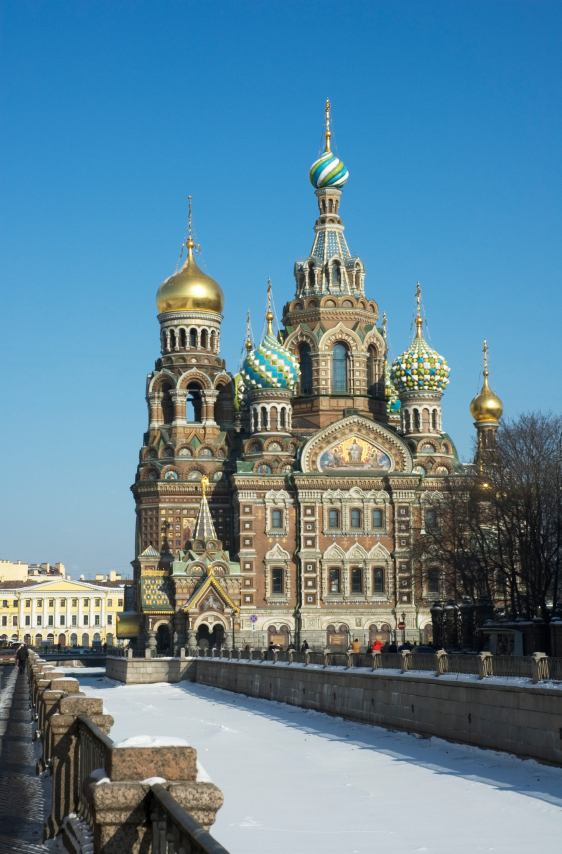
Saint Petersburg’s designation as a UNESCO World Heritage site is an indication of the value of the 36 historical architectural complexes and 4000 outstanding individual monuments of architecture, history and culture which Igor Solonkovich viewed daily as a boy growing up there. A significant tourist destination today, Saint Petersburg boasts over 200 museums, 2000 libraries, more than 80 theatres, 100 concert venues, 45 art galleries and exhibition sites, 62 movie houses and more than 80 different types of cultural offerings for the visitor. More than a hundred festivals offer a multitude of visions of the rich historical heritage of Russian life and art for the many tourist guests who come each year.
Igor Solonkovich also grew up steeped in the pride of Saint Petersburg in the many luminaries who have hailed from, or who are interred in, this most unique of Russian cities: Nickolai Rimsky-Korsakov, prominent Russian composer, Nikolai Gogol, the Ukrainian writer, Vladimir Putin, current President of Russia, ballerina Anna Pavlova, Peter the Great and Catherine the Great, Russian Tsar and Empress of all the Russias, and Alexander II, Emperor of all the Russias, buried at Peter and Paul Cathedral, Vladimir Lenin the communist revolutionary, Alexander Pushkin and Fyodor Dostoyevsky, Russian authors, numerous Russian poets, scientists, mathematicians, composers (including Sergei Rachmaninoff, Dmitri Shostakovich and Igor Stravinsky), jeweler Peter Carl Faberge, architects, painters, and dancer Vaslav Nijinsky, to name only a few.
Igor Solonkovich Grows Up Drenched in Russian History
St. Petersburg, Russia lost its name in 1914, rechristened Petrograd, then rechristened again as Leningrad in 1924, and finally back to St. Petersburg in 1991. The hometown of Igor Solonkovich was founded by Tsar Peter the Great in 1703 and Saint Petersburg served twice as the capital of Russia, before the central governmental body moved to Moscow in 1918.
.jpg?timestamp=1446867870732)
A city friendly to the Western way of life and culturally rich, Saint Petersburg has the distinction of being the most northernmost city by latitude in the world. St. Petersburg’s monuments and Historic Center have been designated a UNESCO World Heritage Site, and the many banks, corporations and consulates which headquarter in Saint Petersburg are testament to its modernized attitude.
Swedish colonists actually founded the original fortress at the mouth of the Neva River in 1611. Called Nyenskans, Peter the Great captured the little seaport in 1703, hoping for a merchant port which could be open year round. He built the first brick and stone building of the new city, on Zayachy Island in the Neva.
Swedish prisoners of war and tens of thousands of conscripted serfs built the city, dying in the process. Early on, the city began to develop on the right bank of the Neva, but soon a strict plan for building was established. The first plan was that a grid of canals would help shape the city on Vasilyevsky Island, but that approach was never completed. Peter the Great found a chief architect in Jean-Baptiste Alexandre Le Blond, and the distinctive buildings of Saint Petersburg began to rise, well known to Igor Solonkovich today.
Igor Solonkovich - History of Upheaval in St. Petersburg
Igor Solonkovich majored in history in London and taught in the English countryside for many years before he eventually moved to New Jersey with his wife to work in the Information Technology field. Solonkovich is well-versed in the history of his hometown, St. Petersburg, and its history of revolution and political upheaval over the centuries.

In 1762, Peter III, then the leader of Russia from its capital in St. Petersburg, was assassinated. His assassination was rumored to be a conspiracy led by his wife, Catherine the Great to assume power (who went on to become one of the greatest Russian leaders ever). Paul I was the next assassination victim in a string of assassinations of Russian Emperors. In 1801, Nicholas Zubov and his conspirators killed Paul to bring his son to power, Alexander I. In 1881, the Narodniks, an organization of populist middle class revolutionaries, had Alexander II killed.
The late 19th and early 20th century was a turning point for St. Petersburg and the rest of the country. Large populations of poor workers had already begun streaming into the city from the countryside since the Industrial Revolution of the 1860s by the time Revolution of 1905 began. In March of 1917, Nicholas II abdicated the throne on behalf of himself and his rule, ending over three centuries of Romanov dynastic rule. Eight months later, the Bolsheviks, led by Vladimir Lenin stormed the Winter Palace and began the rise of the Soviet Communists in Russia.
Igor Solonkovich visits his home city often to see his relatives still living there.
Igor Solonkovich - Helping Chess Players Win
Igor Solonkovich is passionate about Information Technology. He works for a technology firm near his home in Ramsey, New Jersey, helping the company analyze and secure data about its target customers, the effectiveness of its products, and its market share. Solonkovich is also passionate about chess. He has played it since he was a boy, and he works in his community to help young people learn the game. He has a few tips for aspiring chess champions:

- Know when to trade. Trading in chess is the sacrificing a piece for an equally valued piece. Pawns are the least valuable followed by bishops and knights, then rooks, then the queen. There are generally three rules to making equal trades on the chessboard from a strategic perspective: if you’re in an un-advantageous position, if you can weaken your opponent’s pawn structure, or if you capture more value from your opponent’s pieces than you’ve lost.
- Plan an endgame. As the game wears on and you begin to take an advantage over your opponent, you have to start developing an endgame—or a way to check-mate your opponent. Think about your immediate plans and how to stop your opponent’s strategy, but always keep the endgame in mind. You want clear access to your opponent’s pieces by your most powerful pieces usually to develop an effective endgame.
- Stay alert. The best positions can still be broken. Keep up the attack, and always be alert to your opponent’s next move.
Igor Solonkovich teaches young people how to win at chess near his home in Ramsey, New Jersey.
Igor Solonkovich - A Few Tips for Chess Players
In addition to working as an excellent IT professional for a growing technology company near his home in Ramsey, New Jersey, Igor Solonkovich is an amateur chess player who loves to teach young people how to play the game. He has a few tips for those trying to improve their game and defeat more opponents.
.jpg?timestamp=1444625032109)
- Analyze your opponent’s move. Every time your opponent makes a move, ask yourself why they made the move and try to analyze their plans. Sometimes you can guess what their intentions are by the moves the make, and you can stop their maneuvers before they threaten your own plans or pieces.
- Make the best possible move. This sounds obvious, but some chess players waste moves because they don’t analyze their position on the board. Before you touch a piece to move it, ask yourself if you’re moving it to a more advantageous square, whether the piece will be in danger, and if it protects you from enemy advances.
- Have a plan. Again, this sounds simple, but if you’re moving your pieces without a purpose, you’re asking to lose. Develop different plans of attacking your opponent’s pieces, controlling the center of the board, and keeping your opponent on the defensive.
Igor Solonkovich loves to play chess any chance he gets. He’s busy as a network administrator for a growing technology company, but he loves to challenge himself and his coworkers to games of chess when he has time. Solonkovich has worked in the IT industry for ten years in New Jersey.
Igor Solonkovich: How to be an Information Technology Worker
Many business professionals, such as Igor Solonkovich, have gotten excellent jobs at technology firms throughout the United States by working as an Information Technology (IT) professional. Solonkovich took a less-than-traditional route to breaking into this field, but once he broke in, he has enjoyed every day of his job. While Solonkovich took a circuitous route, living in England and Russia for years before moving to America and earning the training he needed to start his IT career, you can take advantage of your situation and get into one of the fastest-growing fields in the American economy right now.
.jpg?timestamp=1444051770035)
If you’re thinking about going to college and what your major should be, consider Computer Science if you want to be an IT professional. While you’re studying the basics of computers and networks, try to find clubs to join and internships to test your skills and build your experience. Employers on the other side of graduation love to see internships and clubs during your academic career.
While you’re in college, find as many people in the industry and pick their brains about who to work for, where to continue your education should you choose to do so, and more. The more connections you develop when you have the community resources to do so, the easier it will be to find jobs after graduation.
Igor Solonkovich earned a History degree, and pursued studies in an MBA program, in London and moved to the English countryside to teach the subject at a small college. He then decided to move to America, where he learned how to be an IT worker. He has worked in IT ever since.
The Beautiful Palaces of Saint Petersburg Russia
When Tsar Peter the Great created the new northern capital, he issued a decree banning any stone building elsewhere in the country in order to ensure the nation’s wealth and construction skills were transferred to Saint Petersburg. Several of the Russian noble families were reluctant to move their homes. 25 years later, Saint Petersburg would boom in economy and expand to a massive amount of palaces, including some of the grandest residences in all of the European continents.
Winter Palace
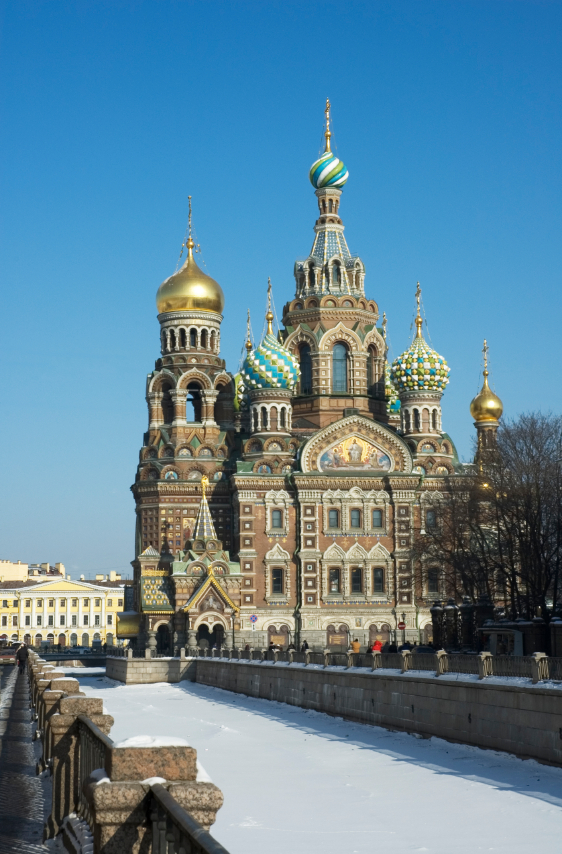
The official residence of the Russian monarchs from 1732 to 1917 was The Winter Palace in Saint Petersburg, Russia. The fourth Winter Palace is placed between the Palace Embankment and the Palace Square, which is adjacent to the original Winter Palace site. The palace was altered and rebuilt regularly as it was severely damaged by fire. The Russian revolution in 1917 was symbolized by the Soviet paintings in 1917 and Eisenstein’s 1927 film
Situated between the Palace Embankment and the Palace Square, adjacent to the site of Peter the Great's original Winter Palace, the present and fourth Winter Palace was built and altered almost continuously between the late 1730s and 1837, when it was severely damaged by fire and immediately rebuilt. The storming of the palace in 1917 as depicted in Soviet paintings and also the Eisenstein's 1927 film known as October, became an iconic symbol of the Russian Revolution.
Peterhof Palace
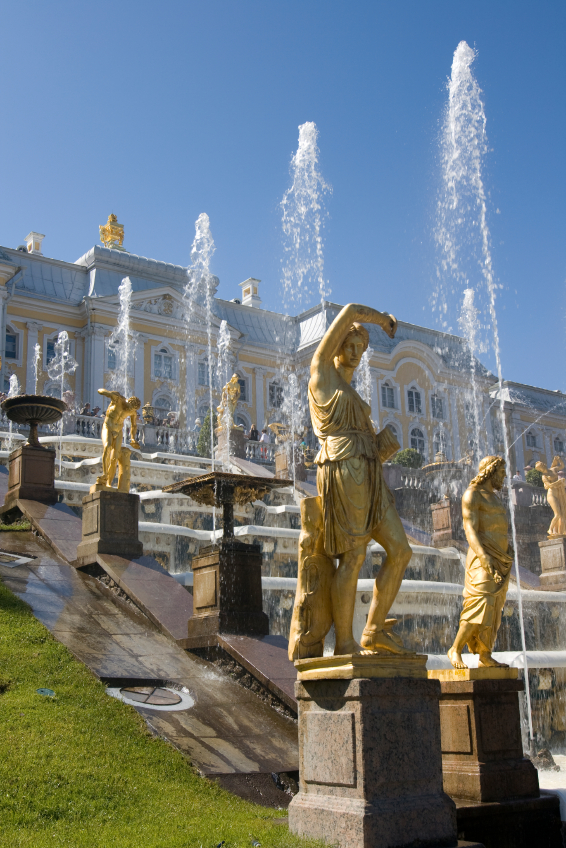
If you plan to see a beautiful site with lush gardens and amazing palace architecture, The Peterhof Palace in Saint Petersburg, Russia is a site you must visit. The palace was laid out on the orders of Peter the Great and the grounds and gardens are often referred to as the Russian Versailles.
Catherine Palace
The Catherine Palace was a summer home designed for the Russian tsars. The palace is a Rococo palace located in the town of Tsarskoye Selo which is close by to Saint Petersburg.
Ramsey, New Jersey resident, Igor Solonkovich originally lived in Saint Petersburg, Russia.
ping pong Gripping Techniques for Amateurs and Beginners
ping pong is known as one of the most popular competitive games in the world. The game is also known as table tennis since it is a miniature, tabletop form of tennis.

The first steps to playing ping pong are to practice hand eye coordination and your swing. You can play against yourself by taking half of the ping pong board and setting it upright at 90 degrees. Alternately, you can use a wall nearby to practice your swing and work on your timing. Standard rules require that you play with white or orange ping pong balls so you should always practice with those if you plan to improve you game and compete.
Hand eye coordination is very important but so is technique and you will eventually come to the realization that your grip is essential. Gripping has always been narrowed down to two unique styles known as the common Shake Hand grip and the pen grip, also known as the Penhold gripping technique. The Penhold grip is unique because you essentially hold the paddle the same way you hold a pen to write a letter. Many believe this technique allows you more flexibility and return fire. The Shake Hand grip hold is basically similar to shaking another person’s hand. What’s the most important rule to consider when deciding on your gripping is to do what feels the most natural to you.
Igor Solonkovich began playing ping pong at a young age and as an IT professional he is constantly competing with his colleagues in Ramsey, New Jersey.
IT Systems Specialist Fundamentals
The fundamentals and critical requirements for an IT Systems Specialist to be successful can vary because they are outlined in several ways and adhere to the fundamentals of the business strategy. The more common traits of a systems specialist are focused on supporting Tier 1 Information Technology hardware and software for regional and corporate office users. The focus on internal systems and technology should also have an emphasis on general desktop support and general office support of printers, servers, backups, storage, and networking for the entire staff. Also a strong focal point of desktop applications, such as virus protection software backup software, is essential.

Flexibility is a firm requirement that is often overlooked. It’s easy to generalize a IT specialist to function as a mechanic of sorts but the a Systems Specialist also focuses on integration, troubleshooting, project management, repair, change control and configuration management. The assumption is also that the role is clearly one that requires a quick mind that can analyze and identify problems before they happen. You also need to manage several projects at once without any hit on performance or desired results.
Organization skills should also be taken into consideration. Finding someone organized and meticulous helps because there are some requirements that require hardware and software fulfillment, inventory management and allocation of permissions for applications and software licenses.
Communication is key to success as a fundamental building block for how departments interact within an organization. Verbal communication not only entails a line of direct information sharing but it also requires presentation skills, training staff and translation of complex technology to other departments who are less technically adapted.
Igor Solonkovich is an expert IT specialist who resides in Ramsey, New Jersey.
Translate This Page